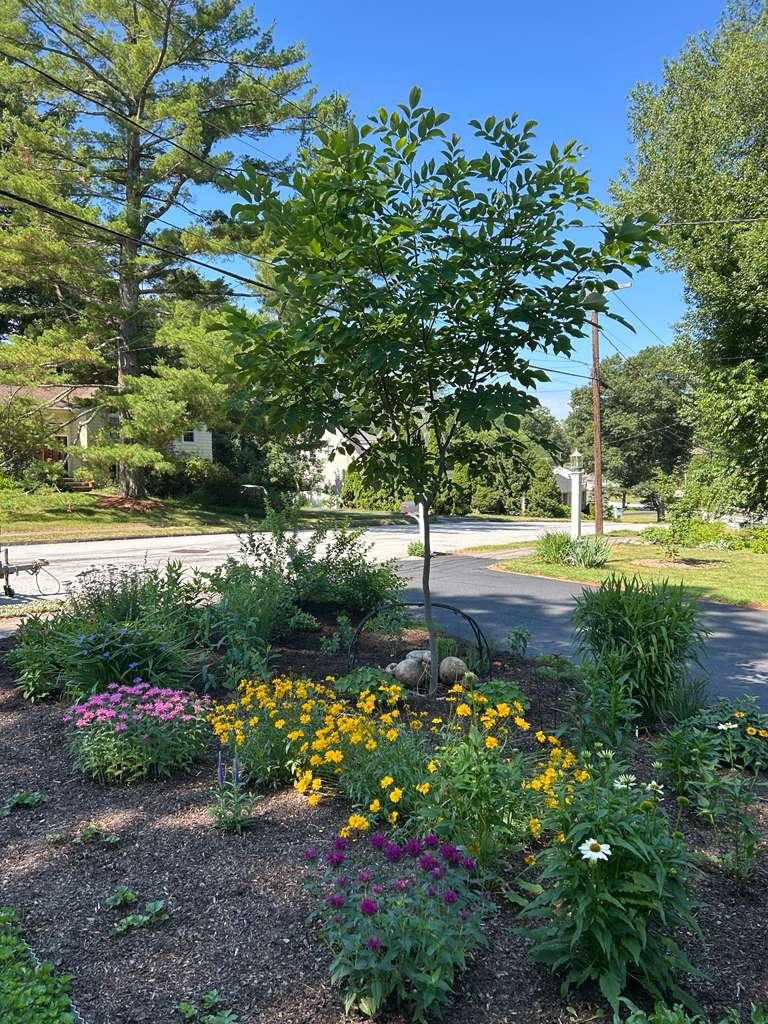
Native plants are those that occur naturally in a region in which they evolved. Native plants provide many eco-friendly benefits. They attract birds, butterflies and local wildlife. They support pollinators and create a foundation for the entire local food chain. They are acclimated to local rainfall amounts and climate. They are naturally resistant to local pests and disease. They do not require fertilizers, pesticides or supplemental watering.
American homeowners apply 80 million pounds of pesticides to 40 million acres of lawns in the United States each year. Native plants thrive without pesticides.
It is estimated that 800 million gallons of gas are burned in lawn mowers annually by Americans. This produces significant amounts of carbon dioxide and other greenhouse gases that drive climate change.
Twelve hundred U.S. crops depend on pollinators to grow. Native plants are essential to pollinators like birds, bees, butterflies, and bats. Pollinator gardens supply food in the form of pollen and nectar to ensure that these animals stay in the area to keep pollinating our crops for continued fruit and vegetable production.
Here are 3 foundational principles for creating a native garden:
- Aim for 70-80% native biomass (more easily achievable by replacing alien trees and shrubs with native species)
- Give Keystone Species priority when choosing natives (Grow Native MA has a great list here). They are species that support an especially large number of insects species and have an outsized impact on the ecosystem, with oaks and blueberries being particularly valuable.
- When creating a perennial flower garden, one doesn’t have to choose only native species. It is also important – and pleasing to the eye – to have something flower at any time during the season, so adding some alien, pollinator-friendly species adds ecological value as well as visual beauty to your garden. Actually, adding ANY native plant species to your garden is a plus!