
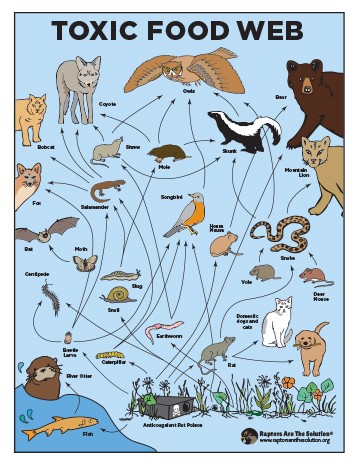
Have you heard of SGARs? They are Second Generation Anti-coagulant Rodenticides, and these poisons are used in rodent bait boxes throughout our state. SGARs work by preventing blood from clotting, causing the animals to die from blood loss over the course of several days. These poisons also bioaccumulate, meaning they do not get flushed out over time but rather stay in the animal’s system. These poisoned rodents become easy prey for their predators. Why are we concerned about them? These poisons are not only targeting rodents but also anything that eats the rodents, or anything that eats the bait.
Raptors (owls, hawks, eagles), carnivorous mammals, and yes – our pets, are at risk of dying because of these SGARs. This is like fighting a war with no allies; we are indirectly killing the predator that is helping to remove the rodents! There are better ways to go about protecting our town buildings, restaurants, and homes than by using these poisons. We can use Integrated Pest Management methods such as exclusion, better control of food waste, and, if necessary, different devices (ie. using CO2, electrocution, birth control).
SGAR use is common. According to the Mass. Dept. of Agricultural Resources Pesticide Program, 96% of rodenticides applied by pest control companies in 2022 — that is, approximately 559,000 pounds — were SGARs. Vets at the New England Wildlife Center report treating hundreds of raptors, foxes, and coyotes for critical SGAR poisoning each year. And it’s not even just predators, but household pets too. MSPCA Angell Veterinary Hospital reports treating dozens of dogs, cats, and other household pets for SGAR poisoning each year. Although increased regulation has significantly reduced the number of humans poisoned by SGARs, nearly 200 people were exposed to SGARs between 2021 and 2023, almost half of whom were children under 6.
Please help protect our environment from these toxins, and rescue our wildlife and pets by speaking up against the use of SGAR (and first generation anti-coagulant) bait boxes. For further information …. read on.